Friends of Parkwood Springs
  • Home
  • Friends Group
  • What’s On
  • News
  • Resources
  • History
  • Wildlife
    • Bird Species
    • Invertebrates
    • Tree of the Month
    • Tree Trail
  • Forest Garden
  • Getting Active
    • Walking Routes
    • Cycling
  • Food and Drink
  • Lantern Procession
  • Contact us
  • Events
  • Home
  • Friends Group
  • What’s On
  • News
  • Resources
  • History
  • Wildlife
    • Bird Species
    • Invertebrates
    • Tree of the Month
    • Tree Trail
  • Forest Garden
  • Getting Active
    • Walking Routes
    • Cycling
  • Food and Drink
  • Lantern Procession
  • Contact us
  • Events
Search by typing & pressing enter

YOUR CART

2/4/2024 0 Comments

Tree of the month: April 2024 - Apple

Picture
Apple trees are not native to Britain. Domestication of Apples probably started around 10,000 years ago and they are now grown world-wide, with many thousands of varieties. DNA analysis shows the earliest form of Apple is native to the mountains of Kazakhstan where it is still flourishing. No Apple variety comes true from seed. All cooking, eating and cider Apples have been developed from selective cross-breeding over thousands of years. The only reliable propagation of any variety is from clone-grafting.

Picture
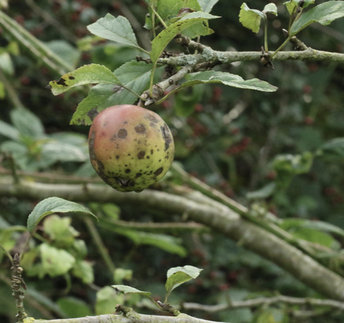
​The few Apple trees we have on Parkwood Springs are probably descendants from the orchard planted by the tenants of ‘Shirtcliffe Hall Farme’ described in 1637 as ‘a dwelling house, and ancient Chappell, one Barne, one Oxhouse, one orchard’. In the 19th Century the old Hall was demolished and ‘a good modern house’ was built nearby, later also demolished, on what is now the car park for Parkwood Springs. Our Apple trees, like any that are unmanaged, produce blemished, diseased apples which are still valuable for wildlife. The blossom is also a great source of pollen and nectar for many insects.

The Romans bred varieties that would ‘keep’ and they could carry as valuable fresh food throughout their empire. Some think our UK varieties originate from these times. Apple trees can grow up to 10 metres high and wide but many are now grafted onto special dwarfing root-stock. Apples have long been grown into shapes that suit particular sites - including ‘espalier’, fan, pillar and even step-over apples which around half a metre high. The Victorian craze for ‘family trees’, with several varieties on one trunk, can still be obtained - there’s an Apple variety now for most growing situations.
Picture

Picture
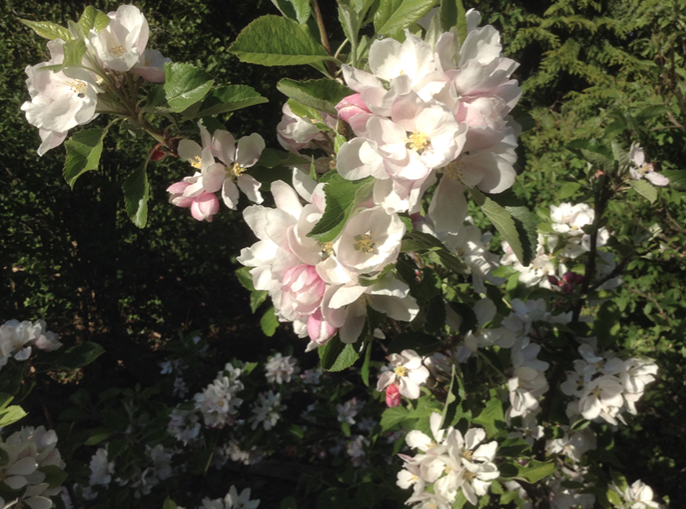
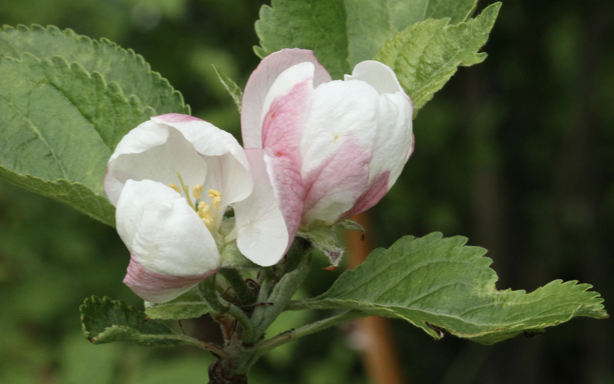
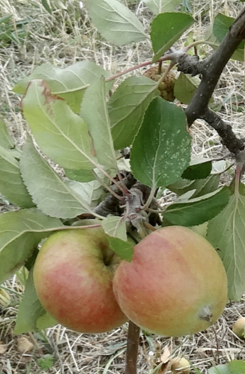
Deciding on the Apple tree to grow: The 5-petalled Apple blossoms, varying in degrees of white and pink, emerge from April to June, depending on the variety. For best results two or more cultivars from the same or adjacent flowering groups need to be grown to maximise cross-fertilisation. You also need to consider things like whether you want ‘eaters’, ‘cookers’, apples to eat off the tree or to store to eat over the winter, what size and shape tree you prefer etc. The RHS website explains what you need to consider and Sheffield Fruit Trees, a social enterprise tree nursery, provides advice, for communities or individuals. with tree varieties that grow well locally. 

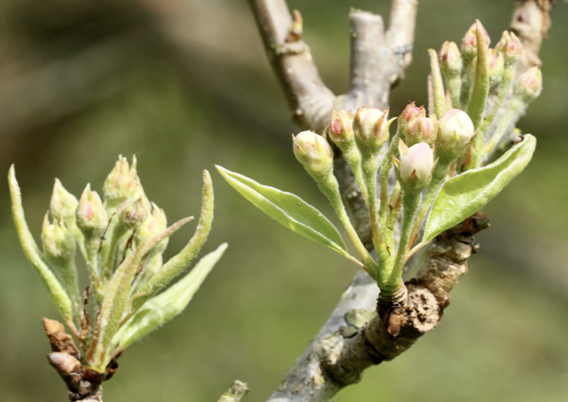
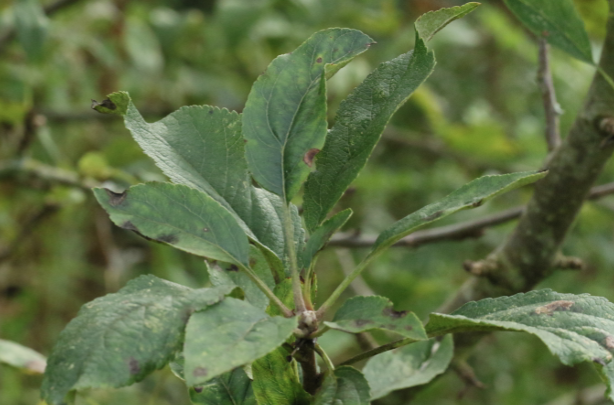
​Apple leaves, which appear simultaneously with the blossom, are roughly oval in shape, with serrated edges and lightly woolly undersides. If untreated, a wide range of pests and diseases affect the Apple, including scab, mildews and the codling moth.
Picture

Picture
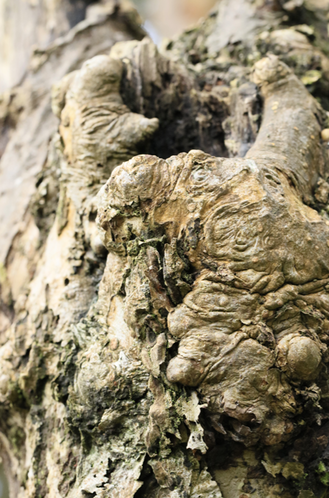
The grey bark, initially fairly smooth, becomes gnarled and split as the tree ages, providing habitat for many invertebrates, lichens and mosses.

​Apple Day, held on the nearest weekend to 21st October, was initiated by Common Ground in 1991 to celebrate the rich diversity of species that are known to exist in many localities. Over 80% of our traditional orchards have been lost in Britain, along with many unique local species. The Brogdale Collection in Kent helps find, identify and preserve these species. If you think you have an old variety there are instructions on their site for you to get help with identification.

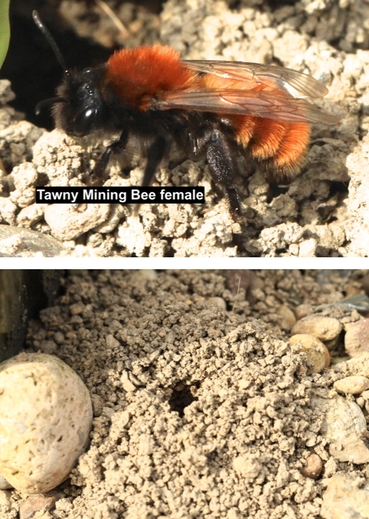
​Wildlife value of the Apple: Apple blossom has long been known to be of value to honey bees but research by Reading University found 70 different species of invertebrates feeding on Apple Trees, including 25 different bees and hoverflies. The most common species were the solitary Mining Bee family (Andrena). On Parkwood Springs we are developing special habits for these ground-nesting bees, of which one known locally occurring species is the beautiful Tawny Mining Bee. You may recognise sites of these in early spring from the small ‘volcanoes’ of dirt that appear for a few days as the female excavates the nest. she then builds several cells below ground, which she lines with supplies of pollen and nectar ready for the larvae as they hatch.
Picture

Picture
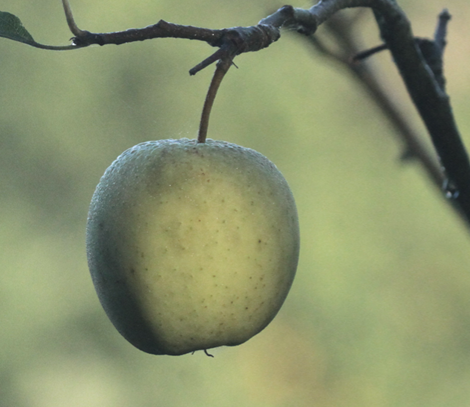
​Bullfinches feed on the nutrient-rich buds of Apple and other fruit trees in spring. Mature Apples and windfalls provide good food for Badgers, Foxes, Mice, Voles, Hedgehogs, Winter Thrushes and other birds. Their sugars feed Butterflies, Moths, Bees, Wasps, Ants and Spiders. Fungi and moulds also grow on the old apples and Apple Trees are a favourite for the hemiparasitic Mistletoe.

Human uses of Apple Trees: For millennia Apple varieties have been developed for eating, cooking, wine and cider making, and juicing. The saying ‘An Apple a day keeps the doctor away’ is thought to have originated in 19th Century Pembrokeshire. Another version: ‘An apple day, no doctor to pay’ reminds us of the times when any doctor’s visit would have been costly. Recent research shows Apples can improve the health of gut bacteria, blood vessels and brain activity due to the fibre vitamins and flavonoids contained, especially in their skin. (BBC Sounds, Dr Michael Moseley - ‘Just One Thing’) Apple wood burns very hot and clean, with a lovely scent, hence its use for smoking of foods, and for fuel. It has a uniform, hard grain and is used for wood-turning, carving of spoons and bowls and tool-handles.
Picture

Picture
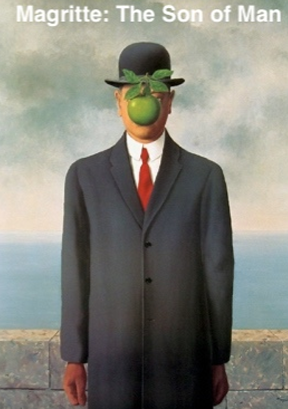
​The Apple in mythology: All fruits in early times tended to be generically referred to as ‘Apples’ so untangling symbols and myths can be inconclusive. In Norse mythology the Apple is a symbol of fertility and immortality while Greek mythology has one of the 12 labours of Heracles (Hercules) as travelling to the garden of Hesperides to pick the golden apple of the Tree of Life, echoed in early Christian tales of the Apple as the forbidden fruit in the Garden of Eden. Some think the latter association may have grown from the Latin- Malus- meaning both Apple and evil. An Apple, labelled ‘to the fairest’ was said to have started the Trojan War. One tale in the Arabian Nights has the Apple as able to cure all human illness. Another Ancient Greek tale holds that  a man should toss an apple to the woman he loves, who has to catch it to confirm their betrothal. Nearer to home, an Apple hung in a tree was thought to dispel evil spirits.

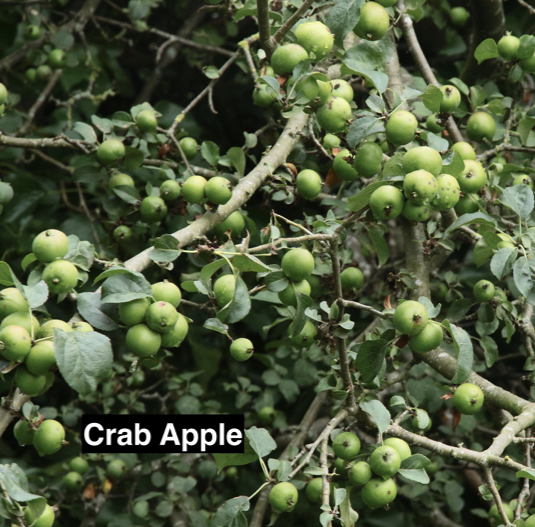
Crab Apples, one of the ancestors of the modern apple, and often found in the wild, produce small, sour, hard crops. High in pectin they make a lovely, tart jelly by themselves or can be added to other jams to help them set. Many domestic varieties of Crab Apple have been developed for their attractive blossoms.

​The Apple in art and literature: Christina Rossetti: ‘An Apple Gathering’ “I plucked pink blossoms from mine apple tree And wore them all that evening in my hair: Then in due season when I went to see I found no apples there”.

Dylan Thomas: Fern Hill
“Now as I was young and easy under the apple boughs About the lilting house and happy as the grass was green The night above the dingle starry, Time let me hail and climb Golden in the heydays of his eyes, And honoured among wagons I was prince of the apple towns And once below a time I lordly had the trees and leaves Trail with daisies and barley Down the rivers of the windfall light.”

The “apple of my eye” saying, appearing in the Old Testament and Shakespeare, is the early name for the pupil of the eye..

The Costard Apple was a common variety grown in the 13th Century and gave rise to the name ‘Costermonger’- a seller of goods especially fruit.
Picture
0 Comments


Leave a Reply.

About us

Friends Group
History
News
Events
Lantern Procession

Resources

Forest Garden
Getting Active
Wildlife
Tree of the Month

Join us

Contact
​
Donate
© COPYRIGHT 2025. ALL RIGHTS RESERVED.